

Nowadays, workwear reflects a company’s professionalism at the workplace, particularly in the manufacturing and corporate sectors. In addition, it is expected to remain a main factor in these sectors’ everyday businesses, as the increasing occurrence of accidents at the workplace is expected to promote wearing appropriate apparel. The International Labor Organization (ILO) reports that around 2.3 million people worldwide die annually from work-related accidents.
The growing demand for workwear
Noticing a growing demand for innovative workwear worldwide, prominent market players have been innovating their technologies over the years, trying to find the right procurement, production, and delivery processes along the way. The main request from their clients is to achieve comfortable, lightweight, and durable apparel, as many fields are confronting the scenario where they have to often change the clothes of their workers, even more than three times per year.
Let’s take the food industry as an example. For service workers within the industry, companies have to provide safety, but also hygiene and comfort as well. The specific uniform or workwear garments that they’re weaing have to support their everyday activities, which correlates with various things, including their own safety, and risk levels in food production as well. Performance and efficiency in conducting their tasks is, of course, also a huge concern that the suboptimal unforms can hinder more than one would realize.
To take another example, during the pandemic, the increase in workflow in the medical field has resulted in large requests for surgical and biological workwear, and major Personal Protective Equipment (PPE) manufacturers intensified production capacity to try to meet the market demand. This increase in demand and production came with challenges as well: managing and assigning the correct size to thousands of employees to produce their uniforms is a highly complicated matter, and requires a nuanced process that relies on not only accurate measurements, but the ability to translate it into a manufacturing process that needs to be as perfect as possible.
Price, production times, and by-products also have to be considered: some health-industry workers require even five distinct pieces of garments for their jobs, and fitting all of these is no easy task. Imagine the impact of having staff out of uniforms while waiting for the correct measurements to be taken. At the end, this is exactly what we can help with: the measurement and fitting processes.
We at Esenca are aware of the e-commerce market’s peculiarities all too well, which include free returns and the constant size-guessing game that comes with all the shipping imaginable. This is typically not the case with corporate uniforms, as it is the responsibility of the individual ordering the uniform to ensure the correct sizes for each garment. Indeed, uniform suppliers tend to have lower return rates, but face lower differences between dimensions, which can quickly transform into mistakes. The majority of workwear items are also branded, meaning that the returned items cannot actually be resold, as they are branded with a certain company’s logo and/or colors.
The environmental issue is also to be taken into consideration. You may be sustainable across the supply chain, from materials to logistics; even the fiber you’re using could be recyclable and your goods might be shipped sustainably, but in the end, it could still amount to nothing. Why, you might ask? Because of wrong sizing, of course: you might be doing everything correctly, but providing ill-fitting garments to a company could result in them throwing all of them away and producing even more waste than you would have with a suboptimal process.
There is a constant discussion about the textiles industry and its impact on the environment. Still, we believe that not so many people are aware of this issue’s dimension. Fabrics are the fourth highest-pressure category in raw materials and water quantity usage. The global impact is severe, contributing to about 1.2 billion tons of CO2. With the current trajectory, the sector is expected to represent a quarter of the total carbon budget by 2050, which is why we feel like there should always be more emphasis placed on the importance of these processes and how they’re designed.
How can the workwear industry benefit from Esenca?
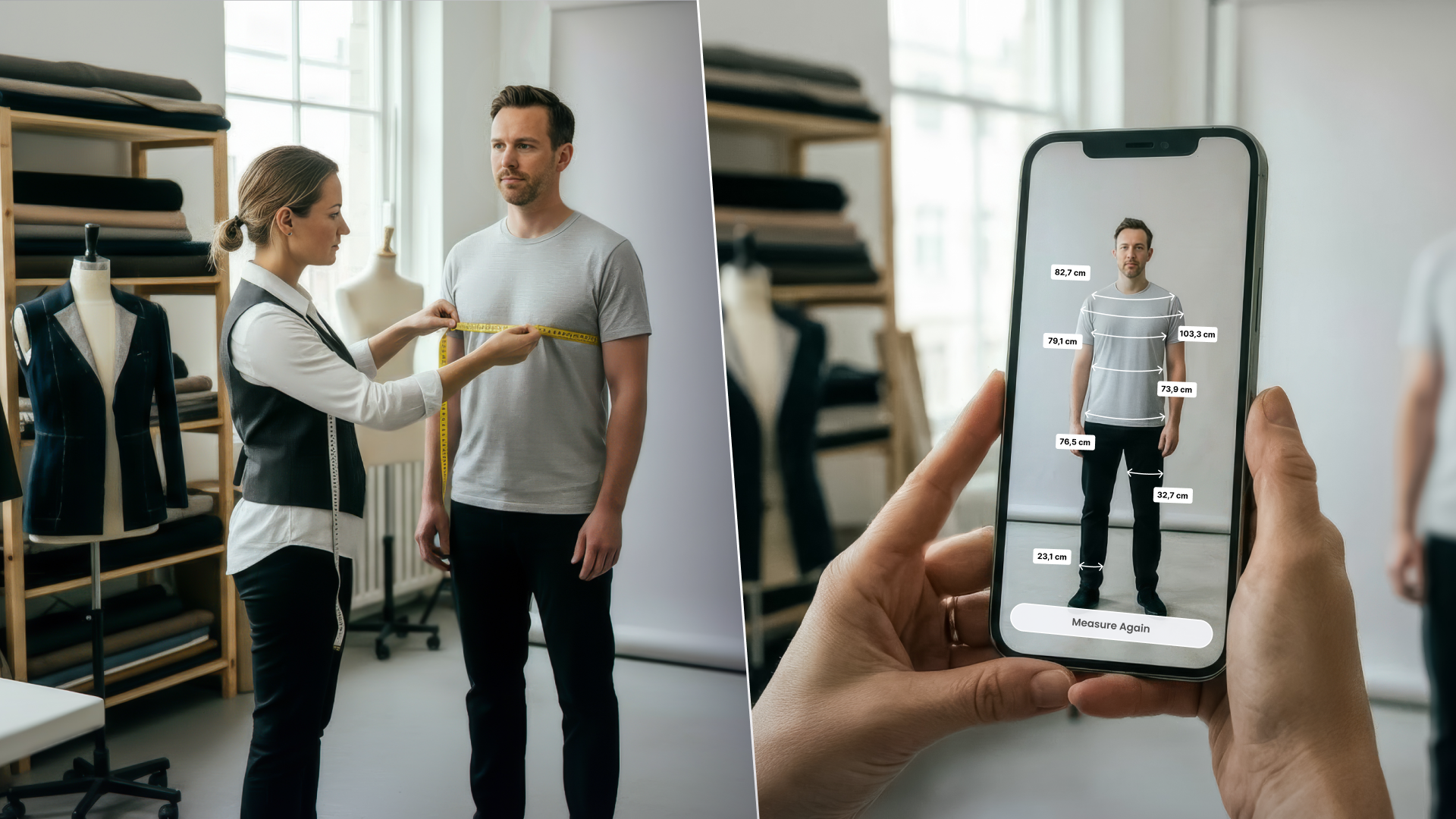
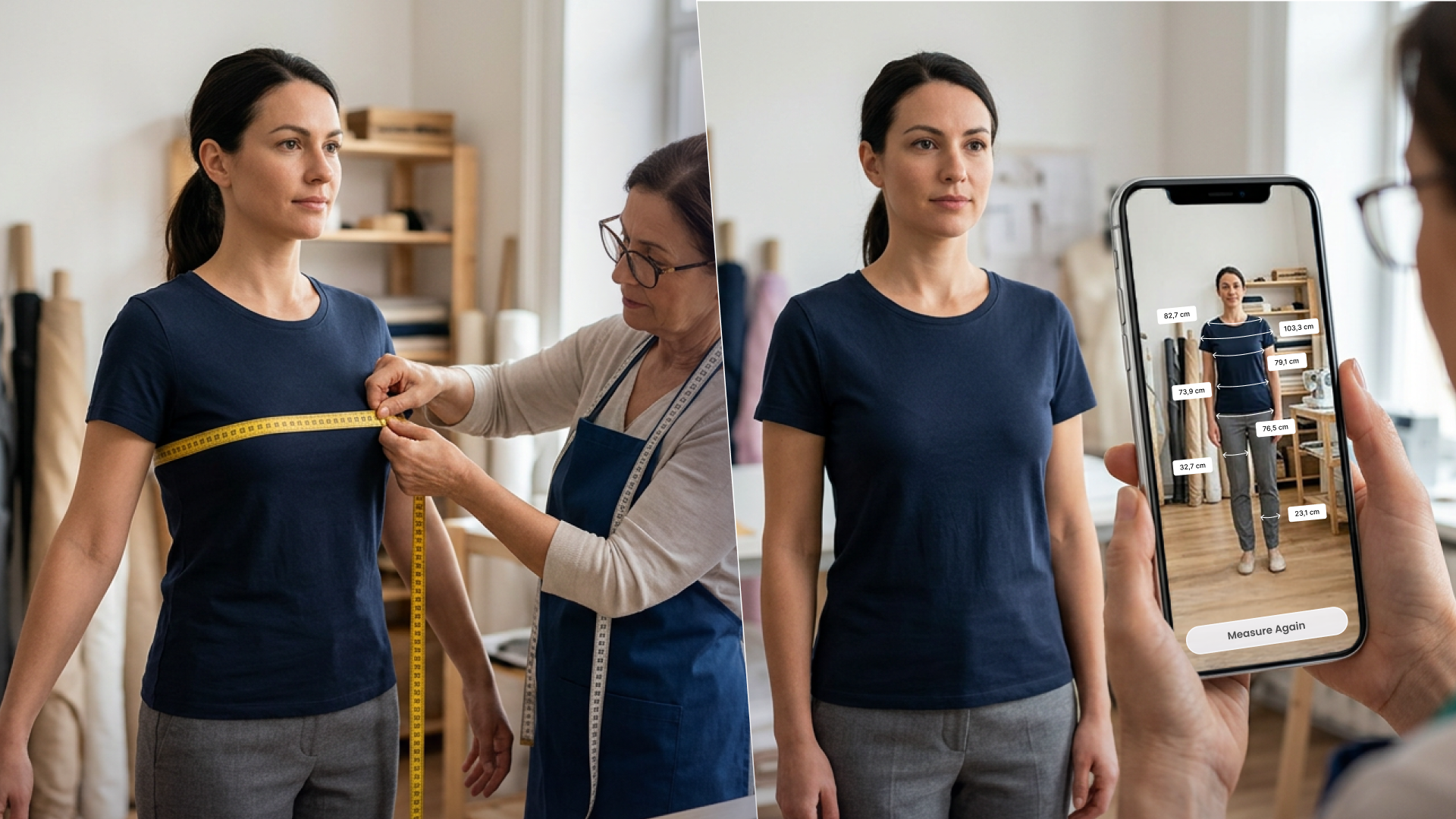
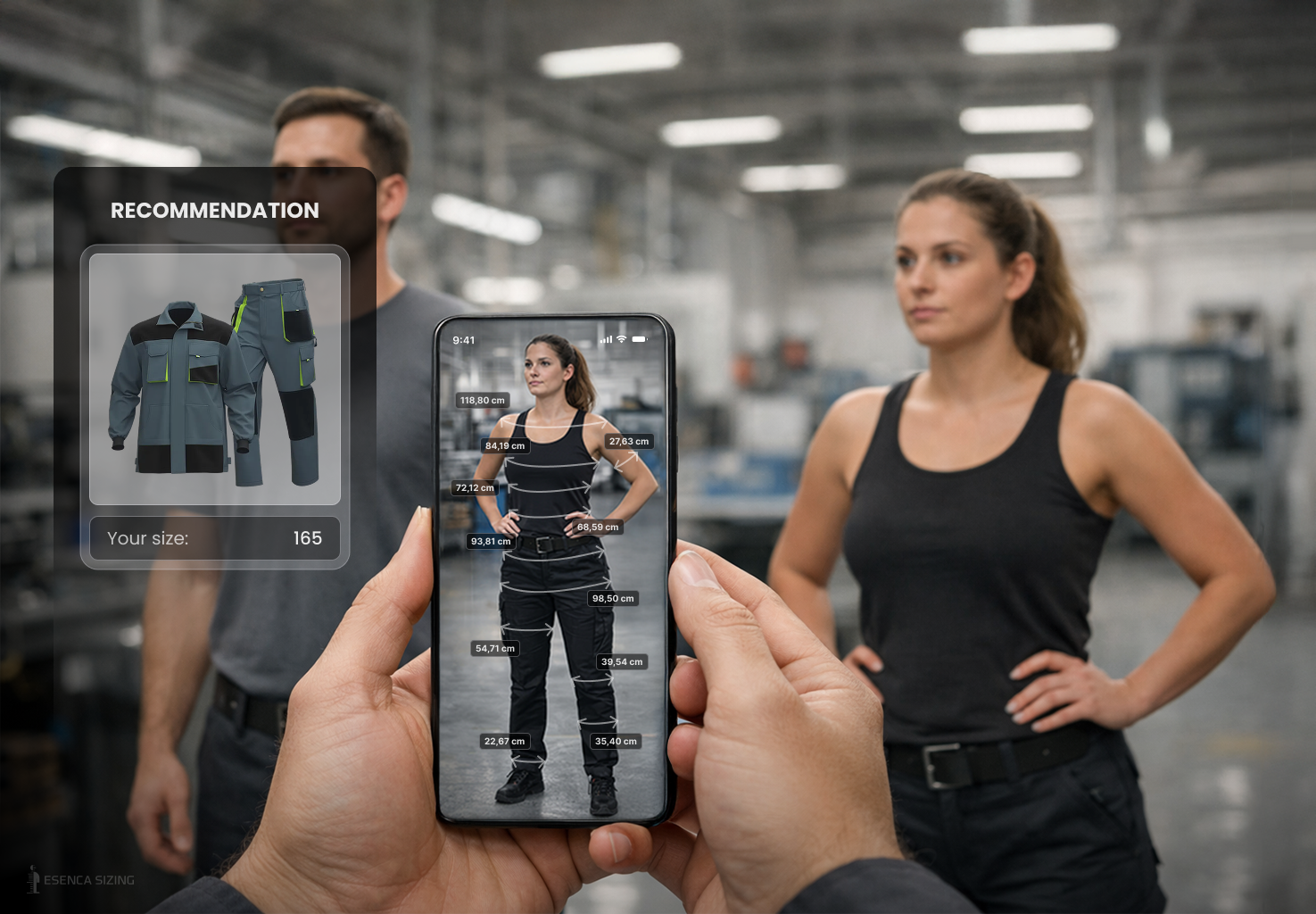
The best thing about body measurement solutions like Esenca is that they will automatically reduce operational costs, improve the processes of obtaining the right size for each employee, give you the best measurements / size recommendations possible.
You can have the measurements of 60 people in only one hour (or even less), from head to toe, accurate and ready to be used in producing any item that you might need for the equipment. The clients won’t be stressed or frustrated by the process and can be confident that the clothes will fit the best they can, thanks to how easy it is to use Esenca, as well as how portable it is. And after all. we know that employees who feel good in their attire will perform better at his tasks.