Garment Audit: find out how well your sizes fit the people who wear them
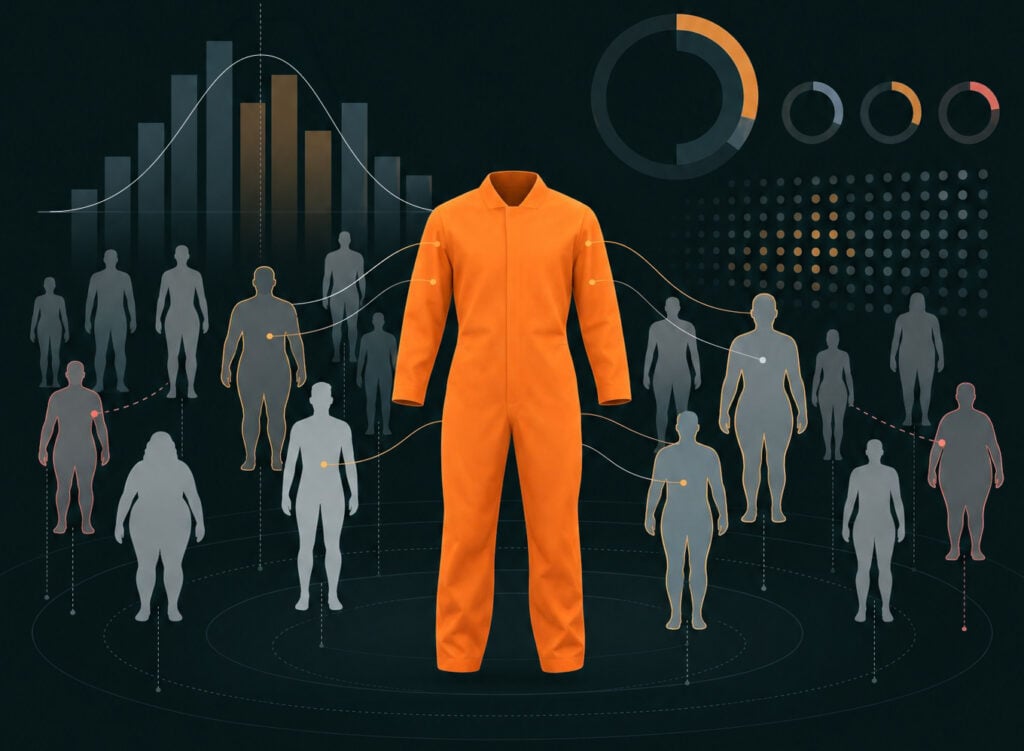
The Esenca Sizing Garment Audit is a measured fit analysis of your size range. We take body measurements from a sample of your real wearers, match every body to every size of every garment you send us, and report where your range fits, where it fails and exactly what to change in your size charts and patterns.
Most size ranges come from old grading rules, legacy charts and best guesses. The cost shows up in the stockroom and the returns queue: sizes nobody orders, sizes that run out first, alterations, exchanges and returns.
A Garment Audit replaces that guesswork with measured data. It shows which of those problems come from the size range itself and what to change to fix them.
Garment Audit at a glance
What it is
A fit analysis that measures how well each garment's size range covers the bodies of the people who wear it
What you send
Size charts, DXF pattern files, physical garments and any other technical information you have
Who we measure
A representative sample of your wearers: at least 30 men and 30 women per audited product, with no upper limit
How we measure
Esenca Tailor or Esenca Pro
Scope
One product or an entire collection
What you receive
Population analysis, product coverage score, size-worn check, coverage improvement recommendations and size range optimisation
Turnaround
Measurement: 1 to 8 weeks. Analysis and report: 2 to 3 weeks from the last measurement.
How a Garment Audit works
1. You share your garments
Send us everything you have on the products you want audited: size charts, DXF pattern files, physical garments and any other technical information. Audit a single product or a whole collection.
2. We measure your wearers
Using Esenca Tailor or Esenca Pro, we capture precise body measurements from a representative group of your wearers. Each person tells us the size they wear in every audited product. If they don’t wear the garments yet, they try on the available sizes and tell us which one fits best. The minimum is 30 men and 30 women per audited product, which is enough for a reliable calibration and coverage analysis. There’s no upper limit, so an audit can grow from a pilot group to your whole workforce.
3. We analyse the fit
Our machine learning platform calibrates each product to the sizes your wearers chose, matches every measured body to every size of every audited product, and calculates how well your range covers the people who actually wear it.
4. You get a clear report with specific actions
You receive a report covering coverage scores, size-worn checks and the specific changes to your size charts, patterns and size structure that would raise coverage for each product.
What's in your Garment Audit report?
Population analysis
A detailed breakdown of how body measurements vary across your workforce or customer base, allowing you to see the true shape of the people you dress.
Product coverage score
A score for each product that shows how well it fits your population and where the gaps are.
Size-worn check
For each product, a comparison of the size each person wears with the size their measurements point to. It shows whether people are in the right size and whether your workforce consistently sizes up or down.
Coverage improvement recommendations
Specific, practical changes to your size charts and patterns that raise each product’s coverage score.
Size range optimisation
Guidance on your size structure, based on the data: where to split a size that’s trying to fit too many people, where to merge sizes that overlap, and which sizes you can drop because almost nobody needs them.
What a better-fitting size range changes
Fewer returns and exchanges
Garments that fit the first time stay in use.
Leaner inventory
You stop producing and stocking sizes that sit on the shelf.
Safer, more comfortable workers
In workwear, PPE and uniforms, a badly fitting garment is harder to work in and offers less protection.
Collection decisions you can defend
Base your next collection or tender on measured evidence about the people who’ll wear it.
Who uses a garment audit?
The Garment Audit is built for companies that want to know, in numbers, how well their size ranges serve the people wearing them:
Workwear and uniform suppliers checking a range before a new contract or tender
PPE manufacturers, where fit affects both comfort and protection
Textile service companies that size and supply garments for many client workforces
Fashion and footwear companies looking at the sizes behind their returns
Garment Audit FAQ
What is a garment audit?
A garment audit is a measured analysis of how well a garment’s size range fits the people who wear it. Esenca measures a sample of your real wearers, matches each body to every size of every audited product, and reports a coverage score with specific changes to your size charts and patterns.
How many people need to be measured?
At least 30 men and 30 women per audited product. That’s enough for a reliable calibration and coverage analysis. There’s no upper limit, so you can measure a pilot group or your entire workforce.
What do we need to send you?
Whatever you have for each product you want audited: size charts, DXF pattern files, physical garments and any other technical information. The more complete the data, the more specific the recommendations.
What if our wearers don't have the garments yet?
They try on the available sizes and tell us which one fits best for each product. We use those choices to calibrate the analysis.
How are the body measurements taken?
Esenca Tailor gives the highest accuracy and is our recommendation for audits. It requires people to scan in underwear or skin-tight clothing against a plain background in good light. Esenca Pro lets them scan in regular clothing and fills the gaps with a statistical model based on height and weight, making it the practical choice when Tailor’s conditions can’t be met.
Can we audit just one product?
Yes. You can audit a single product or an entire collection.
Is the measurement data GDPR-compliant?
Yes. Esenca processes images in real time in server memory and discards them without writing them to storage. An offline iOS option processes measurements on the device itself. Privacy Policy
What is a product coverage score?
A product coverage score shows how well a garment’s size range fits a specific population. A low score means a meaningful share of wearers fall between sizes or outside the range. The report shows where those gaps are and what to change to close them.
How long does a Garment Audit take?
Measurement: 1 to 8 weeks. Depends on how many wearers take part and how quickly they are available. A small pilot group can be measured in days; a full workforce across several sites takes longer.
Analysis and report: 2 to 3 weeks from the last measurement.
See how well your sizes really fit
Start with one product or audit your full collection. Either way, you’ll know where your size range works, where it fails and what to change next.