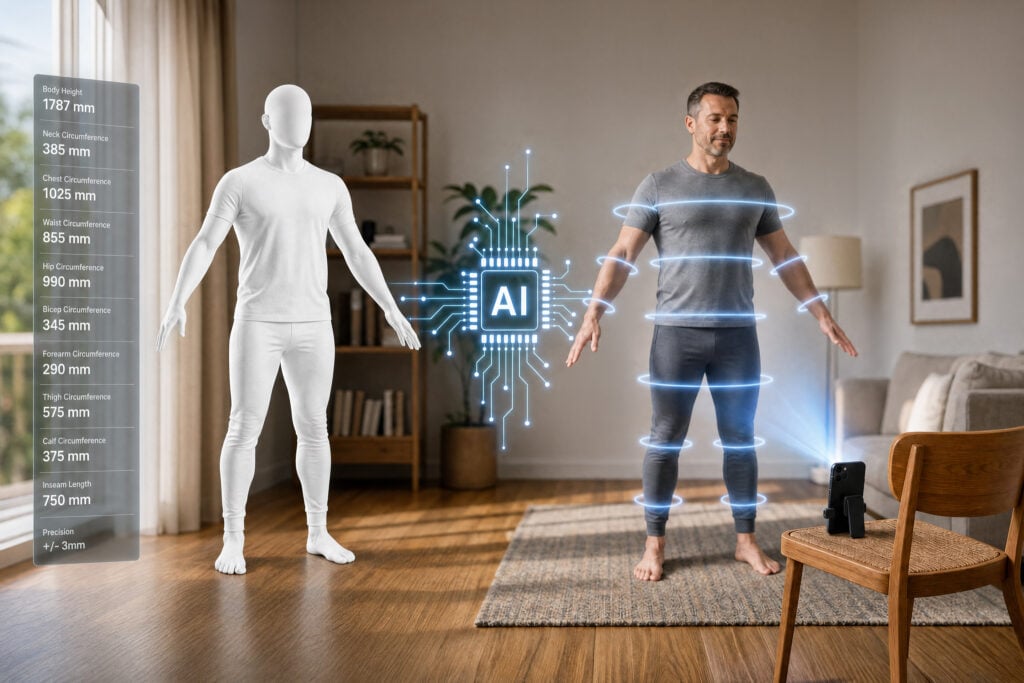



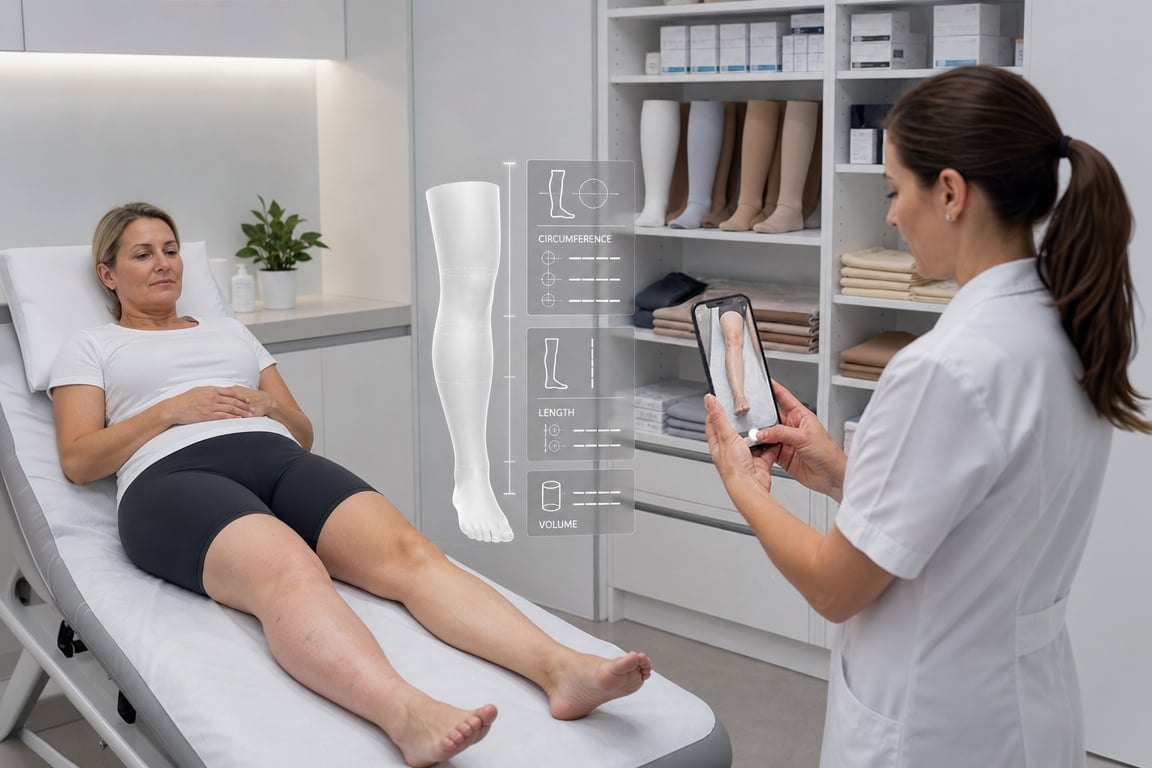
Foot measurement software captures a person’s foot dimensions through a smartphone camera or a dedicated scanner and converts them into a size recommendation, without a Brannock device or a fitter in the room. It’s a category of apparel sizing technology built for footwear, workwear, and PPE brands running sizing across online, in-store, and bulk-order channels at once. Before committing budget, a buyer needs to know what separates a genuine measurement tool from a size-quiz app with a 3D label on it, and what a deployment costs once integration and onboarding are added up.
What Is Foot Measurement Software?
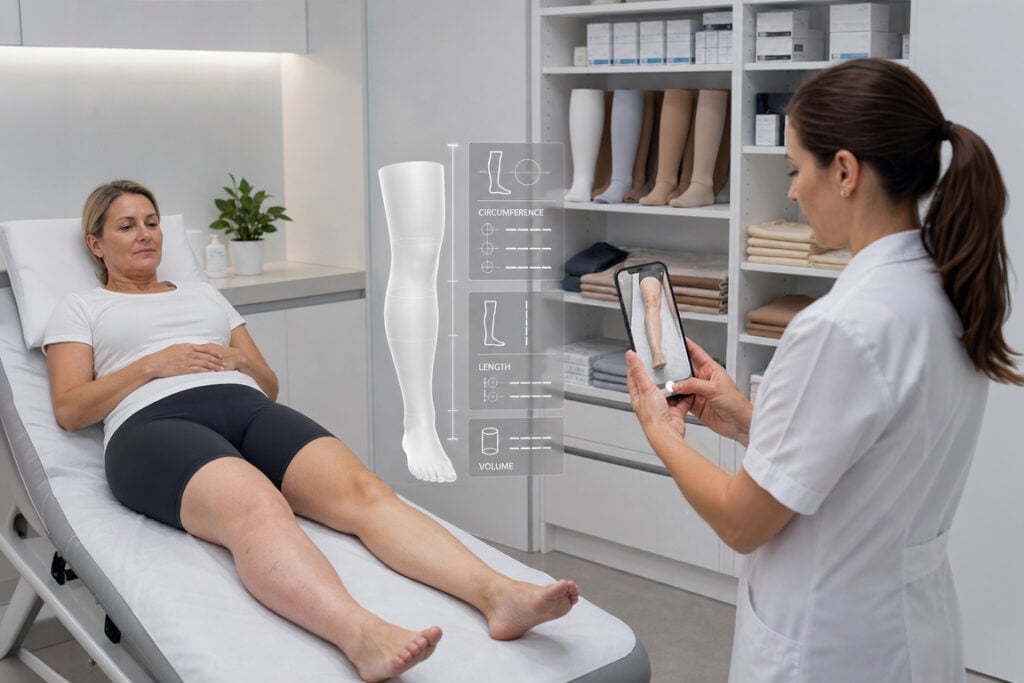
Foot measurement software is a smartphone- or scanner-based tool built on 3D foot scanning. A camera and computer vision capture the foot’s shape, then convert it into length, width, and volume data a brand can map to a size recommendation. A manual measurement produces one length figure. Software produces a fuller set, captured the same way every time.
How It Differs from the Brannock Device and Manual Measuring
A Brannock device measures foot length and width against a fixed metal plate. It needs a trained fitter and an in-person visit, and produces one static reading that usually isn’t recorded anywhere. Foot measurement software runs on a phone camera, captures the whole foot shape instead of two axis measurements, and stores the result as data a brand can query later. It caught on because sizing moved online and into bulk orders, and a metal plate does not scale in either case.
Smartphone-Based vs. Dedicated Hardware Scanners
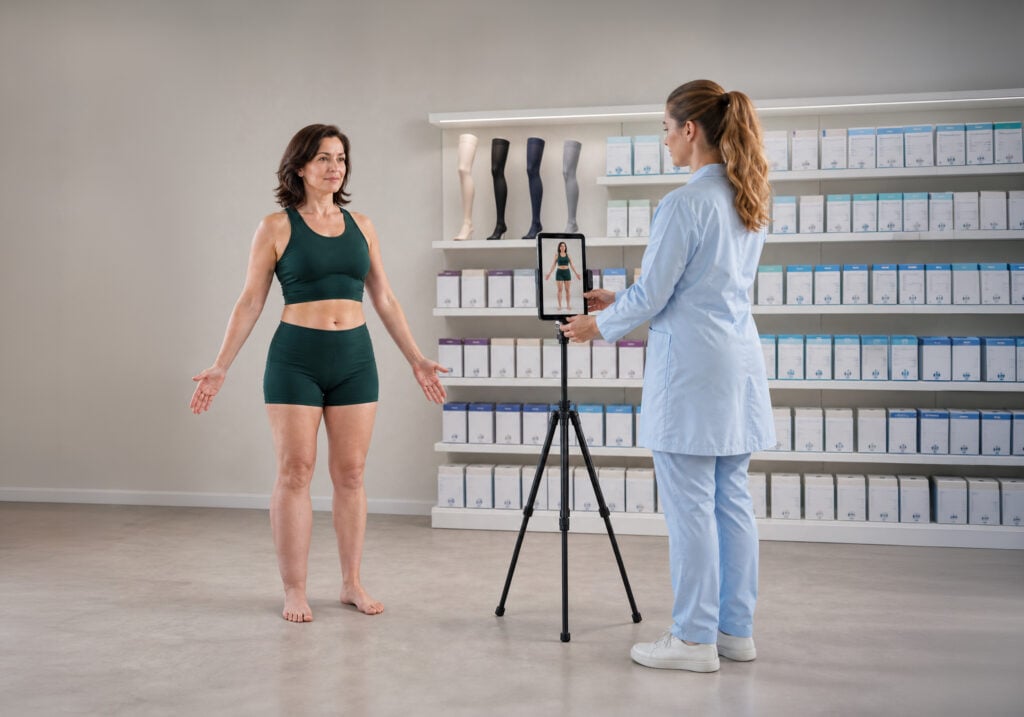
Some tools work as a foot measurement app that runs entirely on a phone’s camera, guided by an on-screen overlay and a reference object such as an A4 sheet. Others need dedicated hardware: a fixed-position scanner, a platen, or a purpose-built kiosk. Phone-based capture is cheaper to deploy across many locations, since it needs no hardware purchase or shipping. Dedicated scanners capture more data points per session but tie a brand to units that need upkeep and eventual replacement. A flagship store can justify a kiosk; a 200-store chain or a remote workforce cannot.
Why Footwear Brands Are Adopting It Now
Rising Return Rates and Their Cost to Margin
Online footwear orders carry a higher return rate than most apparel categories, and most of those returns come down to fit. Every returned pair costs return shipping, restocking or write-off, and the original fulfillment spend. Getting more customers into the right size on the first order avoids that cost altogether.
Omnichannel and DTC Sizing Challenges
Direct-to-consumer brands sell the same shoe through their own site, marketplaces, and wholesale partners, often across regions with different size standards. A shopper who buys a US 9 on one channel and a UK 8 on another needs a consistent way to translate between them. Foot measurement software gives a brand one underlying measurement per customer, mapped to any size chart.
Compliance-Driven Demand in Safety Footwear and Workwear
Safety footwear and workwear programs increasingly have to document how each worker was sized when the footwear falls under a standard such as ASTM F2413 or EN ISO 20345. A paper Brannock reading, if kept at all, is hard to audit across hundreds of sites. Digital measurement data can be tied to an employee record and exported for review.
Key Features to Evaluate Before Buying
Measurement Accuracy and Number of Data Points Captured
Ask exactly what the software measures beyond length. Width, instep height, arch length, arch height and volume all affect fit, and a tool limited to length alone gives roughly what a Brannock device already provides. Get the specific measurements captured, the reference method used to validate them, and the reported error range. A single accuracy percentage on a spec sheet, without those three things, doesn’t tell you much.
Integration with Existing Size Charts and PLM/Ecommerce Systems
The measurement does nothing until it maps to a size on your chart, for your lasts. Ask whether the platform can ingest your existing size charts and PLM data, or whether that mapping has to be rebuilt from scratch. A CSV export a few times a year works for a small pilot, not for a live feed serving thousands of orders a day.
Hardware Requirements (Smartphone-Only vs. Scanner-Dependent)
Confirm whether the platform runs on a standard smartphone camera or needs dedicated hardware, and who owns maintenance and replacement if it does. A smartphone-only tool reaches a new store or a new hire as soon as the user downloads the app or accesses the web solution in the browser. A scanner-dependent one needs a unit shipped, installed, and calibrated first.
Turnaround Time Per Measurement
Ask how long a single capture takes, and how that holds up at scale. Measuring one customer in a fitting room is a different problem from measuring four hundred employees during a two-day rollout. Ten minutes per person is fine in a boutique and a bottleneck in a distribution center working through shift changes.
Data Privacy and Where Measurement Data Is Stored
Foot measurement data can include images, depth maps, or 3D reconstructions alongside the numbers, so ask what’s retained after a session and for how long. Confirm where it’s processed and stored, who can access it, and whether it’s deleted or anonymized after the recommendation is generated. It matters a lot in a workforce rollout, where the same employees get measured again and again across sites.
Foot Measurement Software vs. Other Sizing Methods
| Dimension | Manual / Brannock | Generic size calculator | 3D scanner with dedicated hardware | Smartphone-based foot measurement software |
|---|---|---|---|---|
| What it captures | Length and width, one reading | A size conversion, no actual measurement | Multiple foot-specific measurements per session | Multiple foot-specific measurements per session |
| Hardware needed | Physical Brannock plate | None | Fixed scanning installation | Smartphone |
| Record kept | Rarely logged | Not applicable | Full 3D model | Structured, exportable measurement data |
| Scales to a workforce or remote buyers | No | Yes, but low-value | No | Yes |
vs. Manual/Brannock Measurement
Fast for one person and needs no software at all, but it depends entirely on the fitter’s technique and leaves no exportable record.
vs. Generic Shoe-Size Calculators
Most apply a standard conversion table to a size the shopper already thinks they wear, with no actual foot measurement involved. They are fine for converting a size between brands, but they tell you nothing about that customer’s width or other relevant measurements.
vs. 3D Scanners with dedicated hardware
A scanner can produce very accurate measurements and a full 3D model of the foot, but the hardware is expensive, it needs maintenance, and it only measures people who come to it. A good smartphone-based solution gets close to the same accuracy, and anyone with a phone can use it, which makes it far easier to roll out.
How to Evaluate ROI Before You Buy
Calculating Return-Rate Reduction Impact
Start with your current wrong-size return rate and its cost per return: shipping both ways, restocking or write-off, and service time. Multiply by order volume for an annual baseline. A vendor’s claimed return-rate reduction only means something measured against that baseline.
Implementation and Onboarding Cost
Ask what’s included beyond the license: staff training, integration engineering time, and a pilot period before full rollout. A platform priced low per scan can still carry a heavy setup cost if your team must build the size-chart mapping in house. A platform that takes care of the size recommendation as well provides a clear benefit in comparison to a platform that does not.
Pricing Models: Per-Scan vs. Subscription vs. Enterprise
Per-scan pricing suits low, unpredictable volume, such as a single boutique catalogue. A subscription usually discounts pricing at higher volume and adds ongoing support. Enterprise pricing is negotiated against measurement volume, integrated systems, and a named account team. Pick the model that fits your volume. Vendors tend to lead with the one that suits them.
Implications for Compression Garment Manufacturers
Measurement uncertainty has three direct operational consequences for manufacturers who use body measurement data for garment specification, longitudinal reordering, and treatment monitoring claims.
Reorder decisions. A garment reorder triggered by a measured change that falls within the system’s measurement noise is a reorder based on an artefact. Establishing the SDC of the measurement system and using it as a decision threshold reduces unnecessary remakes caused by measurement variability instead of genuine limb change.
Longitudinal garment adjustment. Patients with chronic conditions requiring periodic garment adjustment depend on measurement data that can distinguish real progression or improvement from noise. If the measurement system’s SDC has not been established for the relevant patient population and anatomical regions, longitudinal adjustment decisions lack a valid evidence base.
Treatment monitoring claims. Any claim that a measurement system supports treatment monitoring, tracking the response to compression therapy and documenting lymphoedema progression or reduction, implies that the system can detect clinically meaningful changes above its noise floor. That claim requires explicit validation evidence: SDC values for the patient population, anatomical regions, and capture conditions in which the system will be used. Without it, the claim cannot be supported.
Questions to Ask Vendors During Evaluation
- What reference method and sample size back your accuracy figures, and can we see the report?
- Which specific measurements does the software capture beyond length?
- Can we pilot with our own size chart before signing a contract?
- What data is stored, where, for how long, and can it be deleted per employee on request?
- What’s the true turnaround time at the volume we’d run, versus a demo-day number?
Frequently Asked Questions
How accurate is foot measurement software?
Accuracy depends on the capture method, the reference used, and how many points are captured. Ask any vendor for their tested accuracy, reference method, and sample size.
Does it work without special hardware?
Most current software runs on a standard smartphone camera with a printed reference object such as an A4 sheet. Some platforms still require dedicated scanning hardware, so confirm this before budgeting for equipment.
How much does foot measurement software cost?
Pricing typically falls into per-scan, subscription, or enterprise licensing, with integration and onboarding work shaping the total. Ask for a full breakdown beyond the per-scan rate.
Can it integrate with our existing size chart?
Most brand-facing platforms support mapping to a custom chart, though the depth of support varies. Ask whether it ingests your chart as-is or your team must rebuild the mapping.
See how Esenca’s foot measurement software works. Book a demo or start a trial. A direct comparison against specific competing platforms is coming.
About Esenca Sizing
Esenca Sizing is a machine learning-powered body, hand, and foot measurement platform used by manufacturers and distributors in medical garments, workwear, and footwear. The platform is browser-based, requires no hardware or dedicated app, and is ISO 8559 certified and GDPR audited. With over 500,000 measurements processed across 21 supported languages, Esenca Sizing provides consistent, body measurement data for production and fit optimisation workflows.