


In compression therapy, the garment is the treatment. Unlike a drug whose active ingredient is fixed at the point of manufacture, a compression garment delivers its therapeutic effect through a precise mechanical relationship between the garment and the patient’s body. That relationship begins — and can fail — at the moment of measurement.
This is why measurement standardisation is not a consideration for compression garment manufacturers in procurement. It is a production requirement. The quality of the input data determines the quality of the garment. And the quality of the garment determines whether the patient experiences the intended therapeutic outcome.
For R&D leaders and medical directors who understand this dependency, the question is not whether to standardise measurement, but how and what a standardised system is actually required to do.
See how Essity used Esenca Sizing in the Essity case study.
The Problem with Tape Measurement Is Not the Tape
Tape measurement has been the default method for compression garment fitting for decades. It is low-cost, widely understood, and does not require hardware. In the hands of a skilled and consistent fitter, it produces workable results.
The problem is the variability introduced by the human operator — and by the conditions in which that operator works. Research and patent literature in compression garment technology has documented inter- and intra-operator variability of between 8% and 12% using tape measurement techniques. Depending on the circumference being measured, such variability can translate into differences of several centimetres.
At the scale of compression garment production, that variability range is large enough to generate systematic fit failures.
Six variables drive that variability:
Anatomical landmark identification. Different fitters place the tape at subtly different positions on the limb. This variation can be significant in anatomically complex areas such as the ankle, the back of the knee, and the thigh base.
Tape tension. How firmly the tape is pulled against the limb varies between operators, between measurements, and even across the same session as a fitter fatigues.
Patient posture. Whether the patient is standing, seated, weight-bearing or non-weight-bearing affects circumferential measurements. Limb volume has been observed to change by a median of approximately 3% within a single day, meaning uncontrolled posture introduces real noise.
Measurement sequence. Taking measurements in a different order can change the values recorded, particularly for oedematous tissue that responds to handling.
Fitter experience. Inter-rater reliability for tape measurement of lymphedematous limbs is consistently lower than intra-rater reliability — even among trained physiotherapists. When staff turn over, measurement consistency does not automatically transfer.
Transcription and data-entry errors. Measurements recorded on paper and manually entered into ordering systems introduce a second layer of error entirely separate from the measurement itself.
Each of these variables is partially in isolation. In combination, across multiple fitters, multiple sites, and ongoing production, they compound into a measurement environment that is difficult to control and harder to audit.
Accuracy and Repeatability Are Not the Same Property
These two terms are frequently used interchangeably in discussion of measurement systems, including in commercial contexts. The distinction matters operationally.
Accuracy refers to how close a measurement is to the true value. A system that consistently reads 2 cm above the actual circumference of the limb is inaccurate. It has a systematic bias.
Repeatability refers to whether the same measurement, taken under the same conditions, produces the same result. A system that always reads 2 cm above the true value is inaccurate — but it is repeatable. And for certain manufacturing and longitudinal applications, repeatability is the more operationally relevant property.
A method can be inaccurate but repeatable — and for longitudinal monitoring and production consistency, repeatability is often the more valuable property to achieve
For compression garment manufacturers, this distinction has concrete implications. A repeatable measurement system allows you to:
- Compare measurements across time to assess whether a patient’s limb dimensions have changed, rather than whether a different fitter took the measurement differently.
- Apply consistent sizing decisions across a patient population, because the input data follows a predictable distribution.
- Establish a production baseline and audit against it, because the measurement process is not a source of uncontrolled noise.
Tape measurement, in most clinical and production settings, is neither consistently accurate nor reliably repeatable across operators. Standardisation addresses both properties, but they require different interventions.
What Standardisation Actually Requires
Standardising measurement means more than just replacing a tape with another tool. A new tool that is used inconsistently, applied to different anatomical positions by different operators, and documented in different formats, solves none of the underlying problems.
Genuine standardisation across a compression garment manufacturing workflow requires:
Consistent anatomical landmark definitions. The circumference measured at “the calf” must refer to the same anatomical location every time, for every fitter, in every clinical or production environment that feeds data into your system.
Controlled patient positioning. The conditions under which measurement occurs standing, seated, limb position, and time of day relative to garment removal – must be specified and reproducible.
Operator-independent capture. The measurement process should not produce systematically different results depending on who performs it. This means removing or minimising operator judgement from the critical steps.
Structured documentation. Measurements must be recorded in a format that is machine-readable, auditable, and directly integrated with the ordering or production system — not handwritten and manually transcribed.
Defined measurement specifications for the anatomical regions being captured. What counts as a valid measurement of an ankle, a calf, a knee, or a thigh is not universally agreed upon. The system must define these consistently with the garment specifications it feeds.
This level of standardisation is achievable. But it requires both the right technology and the right implementation framework, and the technology alone is not sufficient.
What Digital Measurement Can and Cannot Standardise
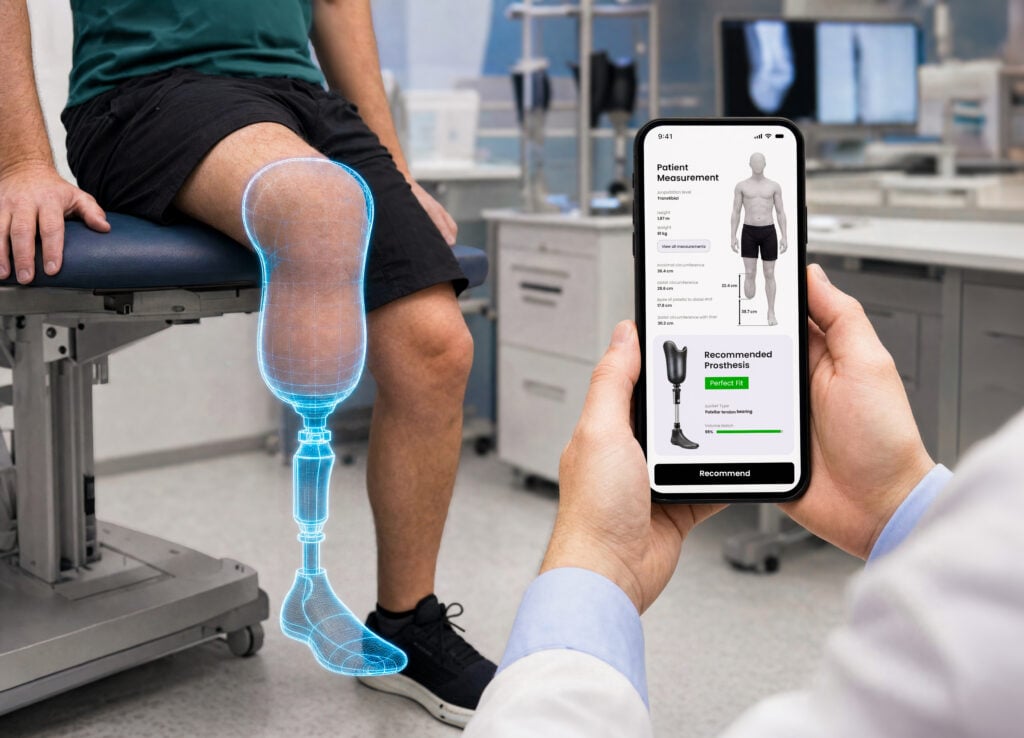
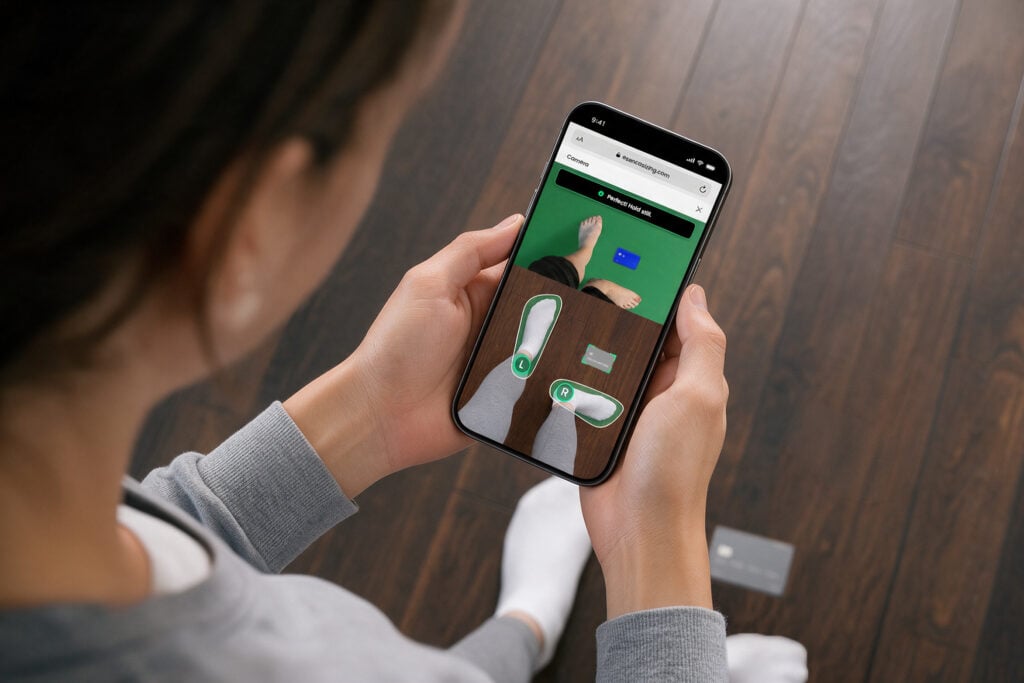
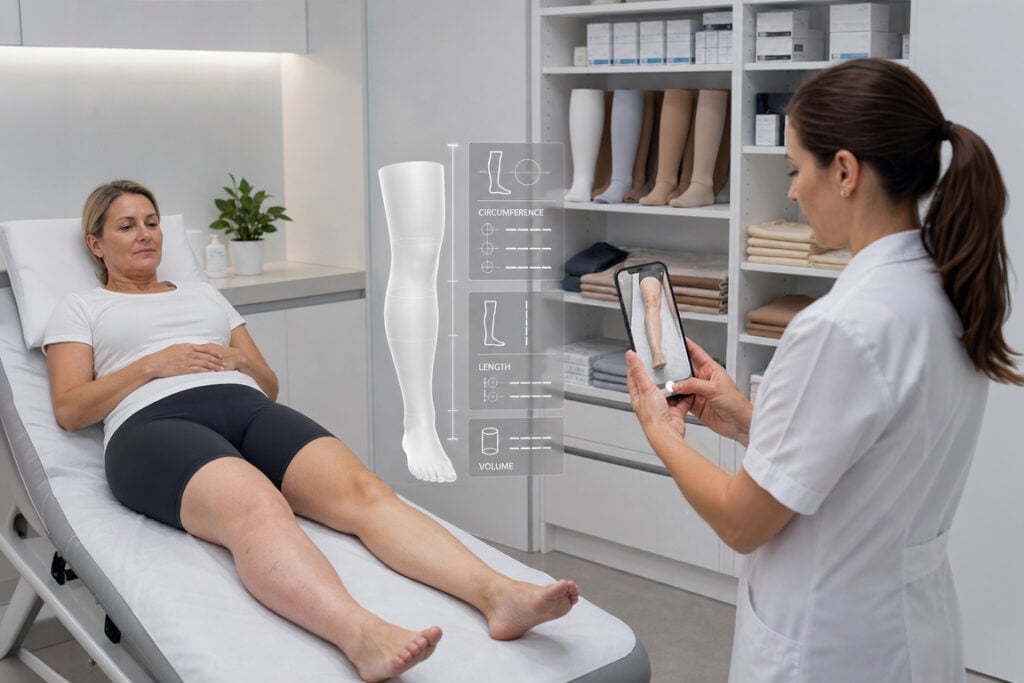
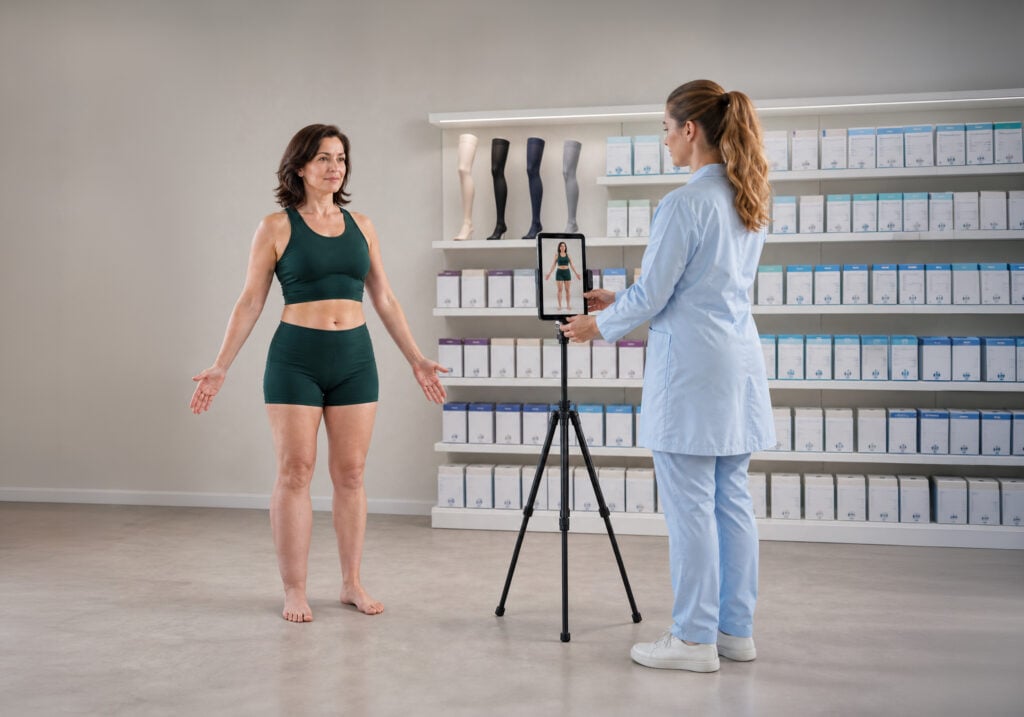
Machine learning-powered body measurement platforms address several of the operator-dependent variables that make tape measurement inconsistent. By automating landmark detection, circumference extraction, and documentation, they remove the operator from the measurement calculation itself, leaving them responsible only for ensuring appropriate capture conditions.
In practical terms, a well-implemented digital system eliminates variability from tape tension, landmark identification, measurement sequence, and transcription. It produces structured, auditable data that flows directly into ordering or production systems without a manual hand-off.
However, digital does not automatically mean accurate, and it does not automatically mean validated for your specific application. Two qualifications matter for R&D and medical directors evaluating digital measurement technology:
Population validity. A measurement model must be validated for the specific patient population it will measure. A system trained and validated on healthy, non-oedematous populations may not perform equivalently on lymphoedematous limbs, post-surgical presentations, or the anatomical characteristics of specific patient demographics.
Anatomical region specificity. Performance on a calf measurement is not evidence of performance on an ankle or thigh measurement. The validation evidence should cover the specific anatomical regions relevant to the garment type being produced.
A digital system that is well-validated for your use case significantly reduces the measurement variability that leads to fit failures and remakes. A digital system applied to populations or anatomical regions outside its validation scope may produce consistent results that are systematically wrong.
The Manufacturing Consequence of Measurement Variability
For compression garment manufacturers, measurement variability is not an abstract quality concern. It has direct production consequences.
The fit error rate for custom compression garments based on manual tape measurement has been estimated in clinical and patent literature at between 15% and 40%. Garments in this error range must be remade — adding cost, delay, and clinician time, while the patient waits for a garment that delivers the prescribed compression level.
Beyond remakes, measurement variability affects:
Size range design. If the measurement data used to define your size ranges was collected with high operator variability, the ranges themselves may not accurately reflect the body shape distribution of your target population. Size ranges built on noisy data produce garments that serve the measurement artefacts rather than the patients.
Production consistency. Manufacturing to specifications that are themselves variable produces variable output. Standardising the input measurement is a prerequisite for meaningful production quality control.
Longitudinal reordering. Patients with chronic conditions requiring regular garment replacement need consistent measurement data across reorder cycles. If measurement variability means a returning patient records different circumferences because a different fitter measured them this time, the manufacturing decision is based on noise rather than real change.
What to Assess When Evaluating a Digital Measurement System
For R&D and medical directors making technology decisions, a structured evaluation framework covers more ground than a vendor demonstration. The following questions are appropriate to bring to any digital measurement system assessment:
- What populations was the system validated on, and how does that map to your patient population?
- Which anatomical regions are covered by the validation evidence, and at what accuracy and repeatability levels?
- What are the reported repeatability metrics: standard error of measurement, limits of agreement, and coefficient of variation?
- How does the system handle anatomical presentations that fall outside the training population, significant oedema, post-surgical changes, and atypical limb geometry?
- What does the integration path look like between measurement output and your production or ordering system?
- What capture quality controls exist to flag measurements taken under conditions that fall outside the validated parameters?
- How are measurements documented, and what is the audit trail?
A system that cannot answer these questions in detail has not been developed for a medical garment manufacturing context. The evaluation criteria that apply to general body measurement tools are not sufficient for compression applications where fit determines therapeutic outcome.
Standardisation as a Production Requirement, Not a Feature
In most manufactured goods, measurement variability is a quality problem. In compression garment manufacturing, it is a clinical problem that expresses itself as a production problem.
A garment that is manufactured to the correct specifications but built from inaccurate or inconsistent measurement data does not deliver the intended compression level. It may fit the measurement artefact rather than the patient. The downstream consequence — poor therapeutic outcome, garment return, remake, delayed treatment is a function of the measurement process, not the manufacturing process.
Standardising measurement is therefore not a way to improve a system that is already functional. It is a prerequisite for the system functioning correctly in the first place.
The technology to achieve this standardisation exists. What it requires from manufacturers is a clear-eyed evaluation of what the system is validated to do, how it integrates with production workflows, and what implementation conditions are needed for the standardisation benefit to actually transfer to the clinical and manufacturing output.
About Esenca Sizing
Esenca Sizing is a machine learning-powered body, hand, and foot measurement platform used by manufacturers and distributors in medical garments, workwear, and footwear. The platform is browser-based, requires no hardware or dedicated app, and is ISO 8559 certified and GDPR audited. With over 500,000 measurements processed across 21 supported languages, Esenca Sizing provides consistent, body measurement data for production and fit optimisation workflows.