
See the Authors

We kept asking “what size are you?” We should also have asked “does this garment fit?”

We kept asking “what size are you?” We should also have asked “does this garment fit?”

For years, our job has been to answer one question for every employee: what’s your size?

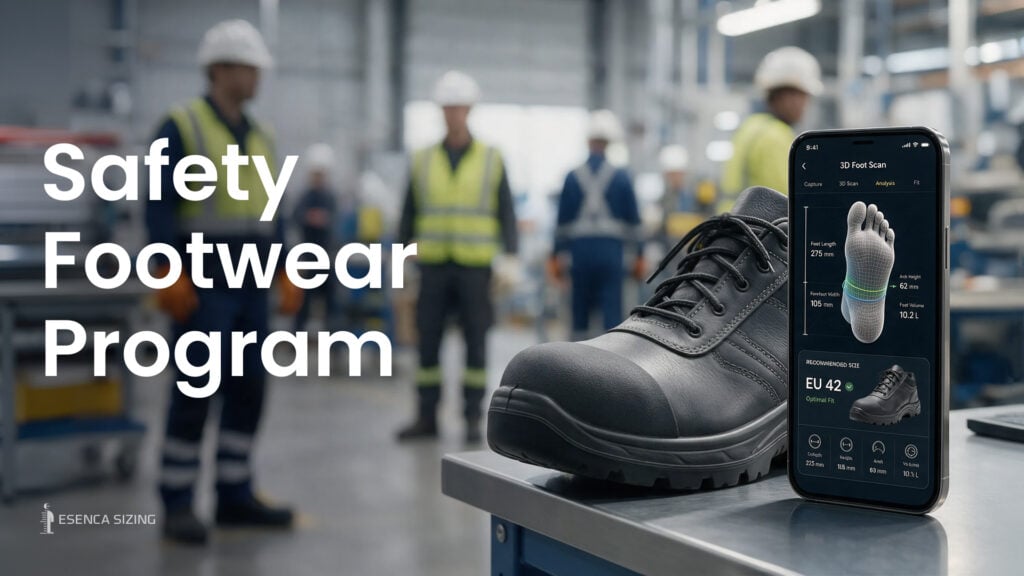
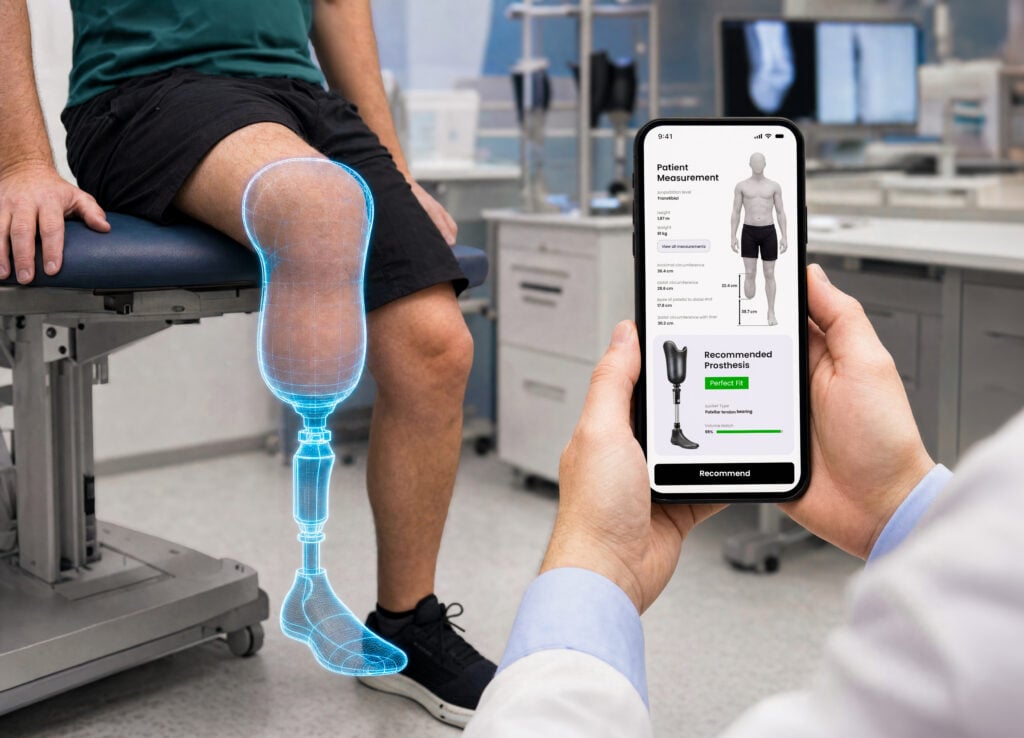
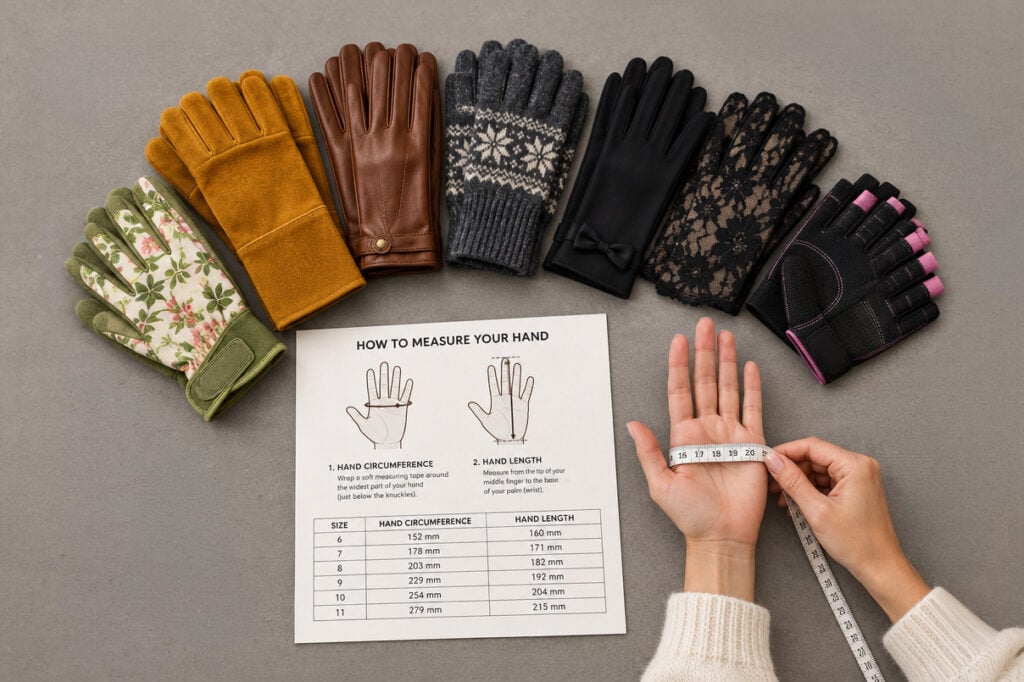
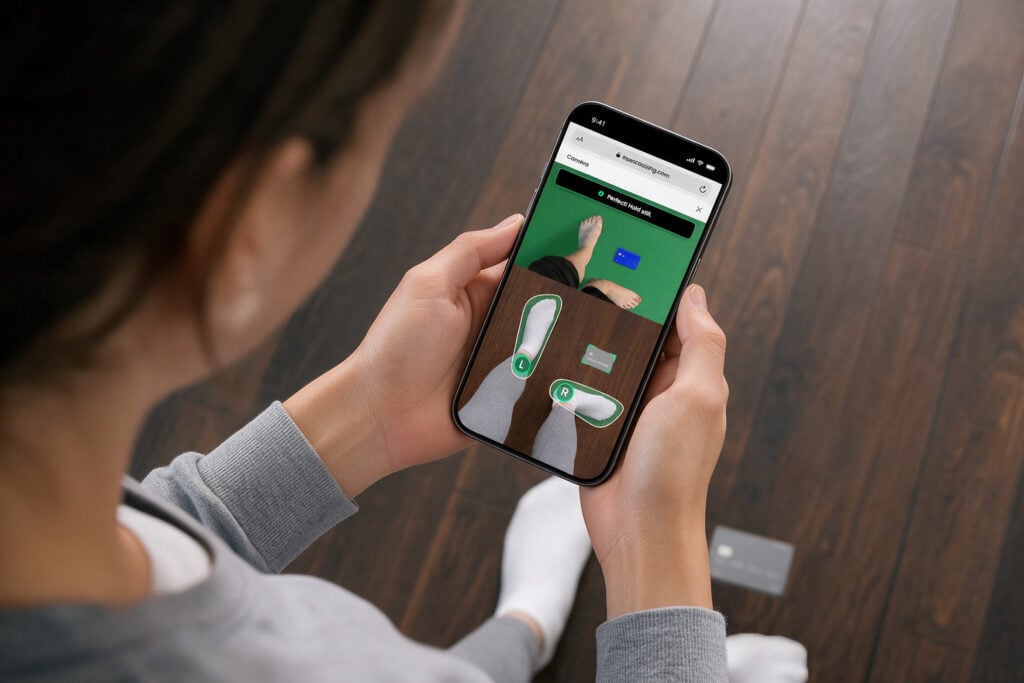
An employee scans their body, hands or feet with a phone, and we recommend the best size in every garment, glove and boot they need. Uniform, workwear and PPE companies use it to size teams across many sites without fitting sessions, sample sizes or guesswork.

But some garments kept coming back, however well we sized the people wearing them. We started to see that the answer wasn’t in the person or the sizing algorithm. It was in the garment.

What we kept seeing

The same problems kept showing up:

  • A jacket that fits at the chest and hangs loose at the waist. The person has the right size for their chest, and the jacket was simply cut straight down.
  • A women’s garment that is really a smaller men’s garment. It follows a man’s shape in a smaller size, and women’s bodies change shape in different places.
  • Two sizes, and neither fits. When the gaps between sizes are too wide, a lot of people sit right between them.

“In each case, we offered the best possible size recommendation from the sizes available. The garment still didn’t fit.” The garment still didn’t fit.

Why sizing alone can’t fix it

A size recommendation can only choose from the sizes that exist. If the garment wasn’t designed for the people who wear it, the best size is still a compromise, and that compromise leads to returns, exchanges, and alterations with every order.

To fix that, you have to look at the garment itself. That’s the second question, and it’s the one Garment Audit answers.
“Sizing technology can only pick the best size a range offers. We kept seeing cases where that best size still didn’t fit, and for some garments that was true for most of the workforce. The cause is the grading. A size range built around one workforce won’t automatically suit another, even within the same country or region. Garment Audit measures the people who will actually wear the garments, shows where the size chart doesn’t cover them, and recommends changes to the chart so it fits as much of that workforce as possible.”

Eduard Cojocea, CTO, Esenca Sizing

How Garment Audit works

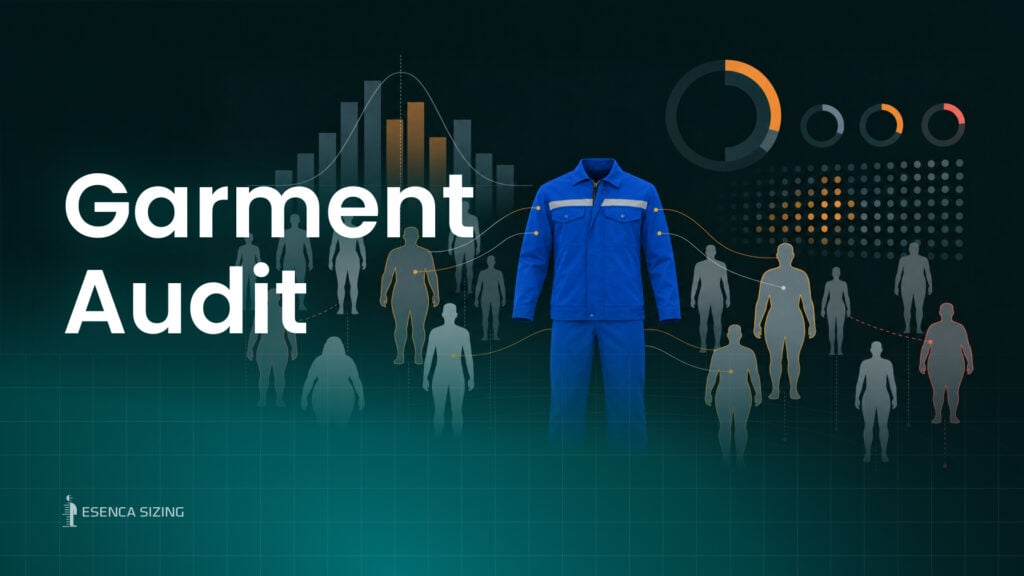
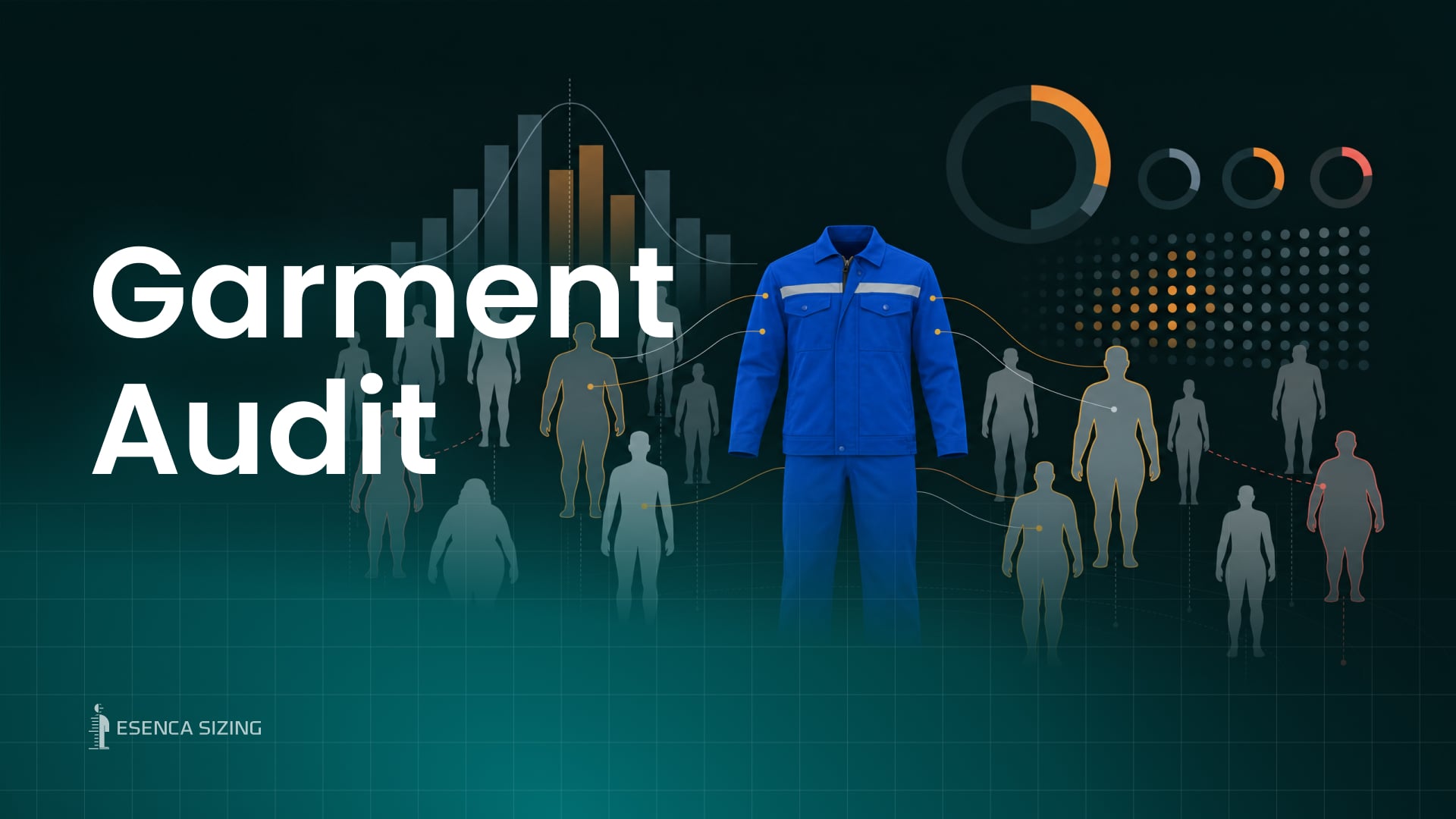
Garment Audit puts your garments and your people side by side and shows where they don’t match.

We measure. We take the finished measurements of each garment from your size charts, pattern files or samples, and your employees do a short body scan with a phone.

We test. Your employees then try on every garment and pick the size they’d wear. Then we check every size against your workforce: who it fits and who it misses.

We recommend. You get a clear list of what to change and what to leave alone.

What you receive

  • Body profile: your workforce’s measurements, with men and women shown separately
  • Fit charts: who each size fits for every garment
  • Recommendations: ranked by how many people each change helps

Some garments will already be right, so you keep them. Others need a new cut, a slim-fit version or in-between sizes. Either way, you know before the next order.

Who is it for?

For uniform, workwear and PPE manufacturers and distributors: show a client, with their people’s data, that your range fits, or exactly what you’ll change so it does.
For companies with their own uniform, workwear or PPE programme: find out which garments are causing returns before placing the next order.

Find out if your garments fit.

You already know your wearer’s size. Find out if your garments fit them. Request a Garment Audit
Put an end to the
sizing guesswork!

With Esenca Sizing, your shoppers can obtain hundreds of precise body measurements in less than 30 seconds. Fast, precise, and simple!

Related Articles

We kept asking “what size are you?” We should also have asked “does this garment fit?”

We kept asking “what size are you?” We should also have asked “does this garment fit?”

For years, our job has been to answer one question for every employee: what’s your size? An employee scans their body, hands or feet with a phone, and we recommend the best size in every...

by

army_blog_post

Offline Sizing for Military Uniform Tenders

Sizing has moved from an operational detail to a scored line in uniform procurement. A military uniform tender now routinely asks how fit accuracy will be demonstrated, how many personnel can be measured per day,...

by

3D Foot Measurement for Commercial Footwear Programs: A Procurement Guide

3D Foot Measurement for Commercial Footwear Programs: A Procurement Guide

A safety shoe program is the process an employer uses to specify, fund, source and issue protective footwear to a workforce, and to document that it did so. Running one at scale means matching hundreds...

by

Prosthetic Socket Fit and Residual Limb Volume: Why Manual Measurement Misses the Change

Prosthetic Socket Fit and Residual Limb Volume: Why Manual Measurement Misses the Change

Residual limb volume is not fixed. It falls sharply in the months after amputation, then keeps moving by a few percent over a single day, and socket fit depends on how well the clinic keeps...

by

Glove Size Chart: Why the Same Size Doesn’t Fit the Same Way Across Brands

Glove Size Chart: Why the Same Size Doesn’t Fit the Same Way Across Brands

A medium from one manufacturer and a medium from another can sit a full size apart on the same hand. There is a standard behind protective glove sizing, EN ISO 21420:2020, and it publishes a...

by

Foot Measurement Software: What Footwear Brands Need to Know Before Buying

Foot Measurement Software: What Footwear Brands Need to Know Before Buying

Foot measurement software captures a person’s foot dimensions through a smartphone camera or a dedicated scanner and converts them into a size recommendation, without a Brannock device or a fitter in the room. It’s a...

by

Home
Solutions
Garment Audit
Industries We Serve
Case Studies
About Us
Blog